

We don't hate the media enough
We need a People's Commission into the Media during Covid-19

The Royal Commission into COVID-19 should have triggered a national reckoning. Instead it revealed how completely the media failed to scrutinise power.
There’s a phrase often repeated online: you don’t hate the media enough. Most people read it as a joke or a bit of internet cynicism. But the New Zealand media’s response to the release of the report from Phase Two of the Royal Commission into COVID-19 is proof that the New Zealand media has forgotten its most basic functions.
The Royal Commission did a post-mortem on the New Zealand government’s handling of the pandemic examining decisions that reshaped our society. The lockdowns, mandates, vaccine policy, border closures, government spending, and the extraordinary expansion of state power. The sheer scope of these unprecedented encroachments on our rights were decisions that determined who could work, who could travel, who could see family, which businesses survived, and even what opinions we were allowed to express.
And yet the reaction from much of the media has been to stick the same permissive lapdog lines back in the political washing machine for another spin. To be fair, the New Zealand Herald did run a front page story on the report this morning. The headline said the response “Could have been better.” That is, technically, a critique, I guess. But everything anyone does could be better. It is not exactly calling for answers on extraordinary overspending that blew up our economy, for example. Imagine if the political roles were reversed. If a National government had spent around $60 billion during a crisis and a commission later concluded that roughly half of it, about $30 billion, was not directly related to the crisis at all, would the headline be “could have been better”? Or would it look more like “Where Did The Other $30 Billion Go?” or “Government Blew Up Economy With Non-Pandemic Spending”?
As I made clear in my response to the report, “New Zealand’s initial response was reasonable and should be commended… but the successes should not provide cover for failings. It is the failings that we should focus on because that is where we can learn.” We have all heard about the successes of the response and the media have eagerly perpetuated the narrative. It is time to reckon with the things that went wrong and for accountability to be taken.
The Commission’s findings go to the heart of how the government exercised extraordinary power during the pandemic. This is a matter that has traditionally been a core focus for journalism as the interrogators of power and its misuses. Yet throughout the pandemic and since, our profoundly uncurious media have been willing to accept anything the Labour government of the time says at face value and move on quickly.
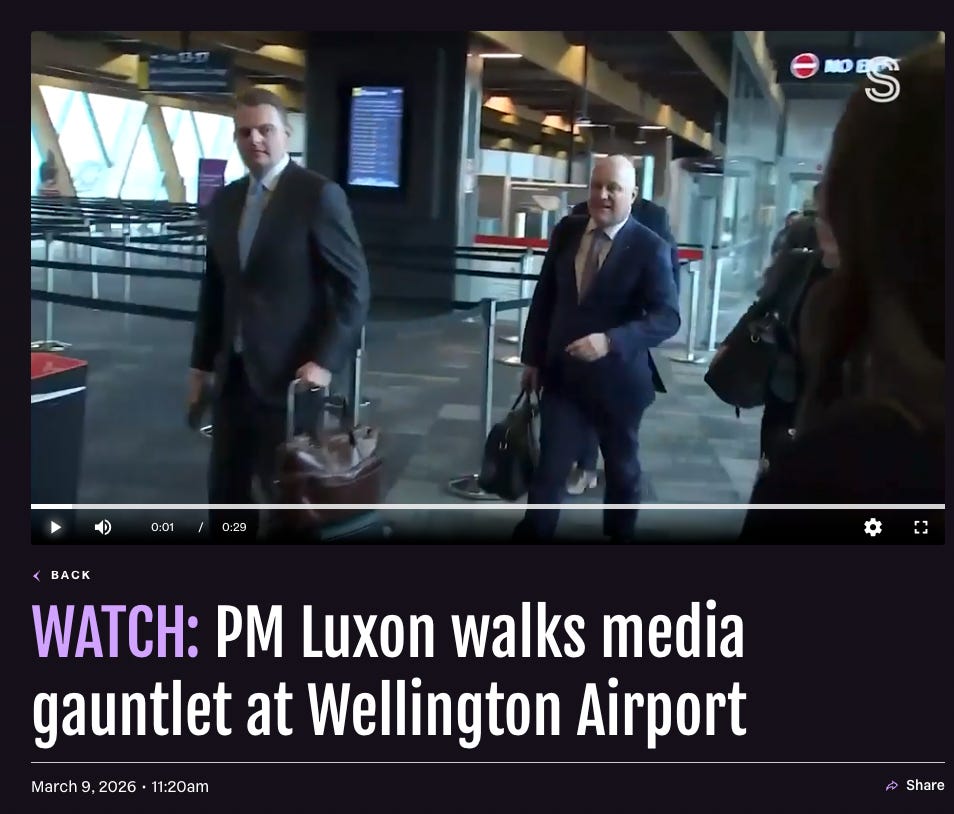
While the report was a flash in the pan of the news cycle yesterday, by contrast journalists have spent a week chasing the Prime Minister through airports and asking every National MP whether they still support him. The dogged determination that has been missing in action during one of the most significant periods of our history, has been on full display as reporters huffed and puffed struggling to keep up with Christopher Luxon as he strode past. Manufactured drama got full coverage, and then one of the largest public policy experiments in modern New Zealand history barely registered.
I have been told by multiple people connected to the Stuff newsroom that they are actively aiming to push National into a coup. They excitedly discuss how they can get Luxon’s political scalp. And while I absolutely agree that they should cover political intrigue and any potential leadership spills, it is unconscionable that they should try to cause one. If we are to change Prime Minister it should come at an election via the will of the people or because the caucus votes for a new leader. Not because journalists who loathe what the party stands for have decided to make sport out of taking the leader out.
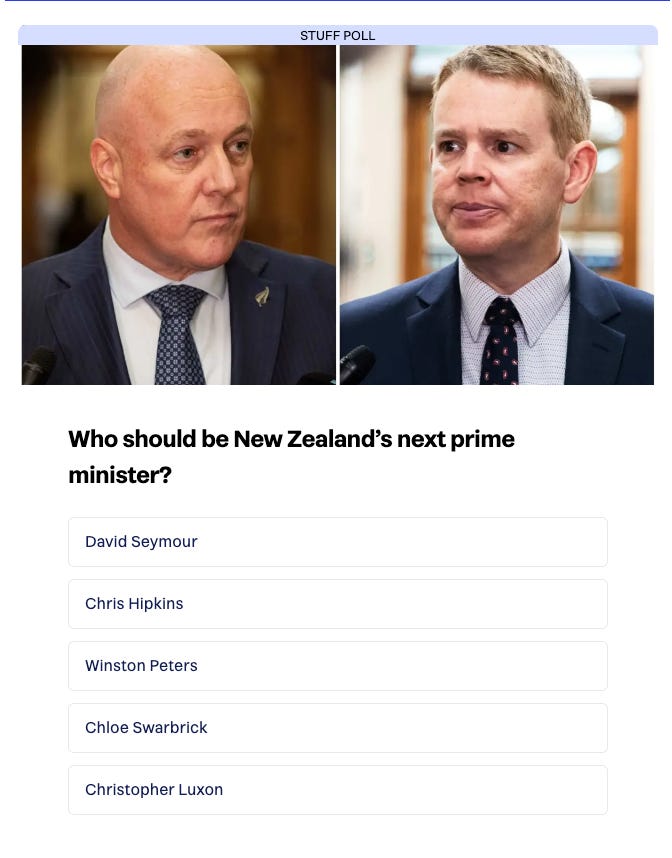
Now I’m not particularly interested in defending Luxon. I’ve said before that he hasn’t been a strong leader. His communication has been weak and he has struggled to sell the achievements his Government has made this term and connect with voters generally. But the media fixation on his supposed unpopularity is partisan.
Luxon’s preferred Prime Minister polling is not dramatically different from Chris Hipkins’. Neither leader is especially popular and both parties have voters speculating whether someone else in their ranks might do a better job.
Over the past six months, across major polls Luxon and Hipkins have generally sat in the same band for preferred Prime Minister of roughly 18% to 23%. The typical gap between them has usually been only 1–3 percentage points, and several polls have shown them tied. For example, the March 2026 Taxpayers’ Union–Curia poll had Hipkins at 22.7% and Luxon at 21% while the February 2026 1News Verian had them tied at 20%. RNZ-Reid Research had Hipkins ahead by 1.7% in January, but both 1News Verian and Taxpayers-Curia had Luxon ahead by 2% and 1.9% respectively. Both men had negative net approval ratings in the most recent Taxpayers-Curia poll.
Yet the media narrative treats one leader as uniquely disastrous while presenting the other as the nation’s natural alternative. Chris Hipkins is routinely portrayed as the reassuring ‘everyman’ waiting in the wings. Despite having released very little policy and refusing to discuss coalition partners, he is being waved in by media as the returning king.
The thing is, we don’t need to speculate about what a Hipkins government would look like. We already had one. Hipkins previously served as Police Minister when ram raids and violent crime surged, Education Minister when literacy rates deteriorated and school attendance collapsed, and Minister for the Public Service during a period when the core bureaucracy expanded by roughly 34%, growing from about 47,000 staff in 2017 to more than 63,000 by 2023. He was also Minister of Health and later Minister for the COVID-19 Response, responsible for many of the pandemic decisions. He was part of the government that decided to restructure the entire health system in the middle of a pandemic, creating Health NZ and the Māori Health Authority at precisely the moment when the country was meant to be focused on managing the largest public health crisis in a century.
None of this record is interrogated by journalists with anything like the intensity applied to Luxon’s polling numbers. When Hipkins tries to rewrite history where are the reporters asking for him to account for the role his Government played?
The role Ardern and Hipkins’ government played in our dire economic situation was outlined in the findings of the Royal Commission and that alone should have triggered a plethora of dramatic headlines and weeks of scrutiny. At the time, most New Zealanders accepted that some extraordinary spending would be necessary to get us through the crisis. There was a broad social licence for emergency measures and wide spread support for the Government safety nets. But the Royal Commission finding that roughly $30 billion was not directly related to COVID response at all and was simply spending that happened during COVID, was not we agreed to.
Some of that spending may well have been worthwhile, but that isn’t the point. One of the most basic responsibilities of government is prioritisation. Governments exist to decide how limited resources generated primarily by our taxes are allocated. And during COVID the usual discipline expected in regards to spending and borrowing largely disappeared. Ardern, Robertson and Hipkins behaved as though they had an unlimited credit card and someone else was going to receive the bill. They were correct, in fact, as that someone else is you and I, the taxpayers.
The pandemic became an umbrella under which all sorts of unrelated spending could occur without scrutiny and it appears they became intoxicated with the seemingly limitless power and let loose. Under normal circumstances, in countries with proper a media class, a revelation of this kind of reckless and irresponsible behaviour would dominate headlines. In New Zealand, it gets “could have been better”.
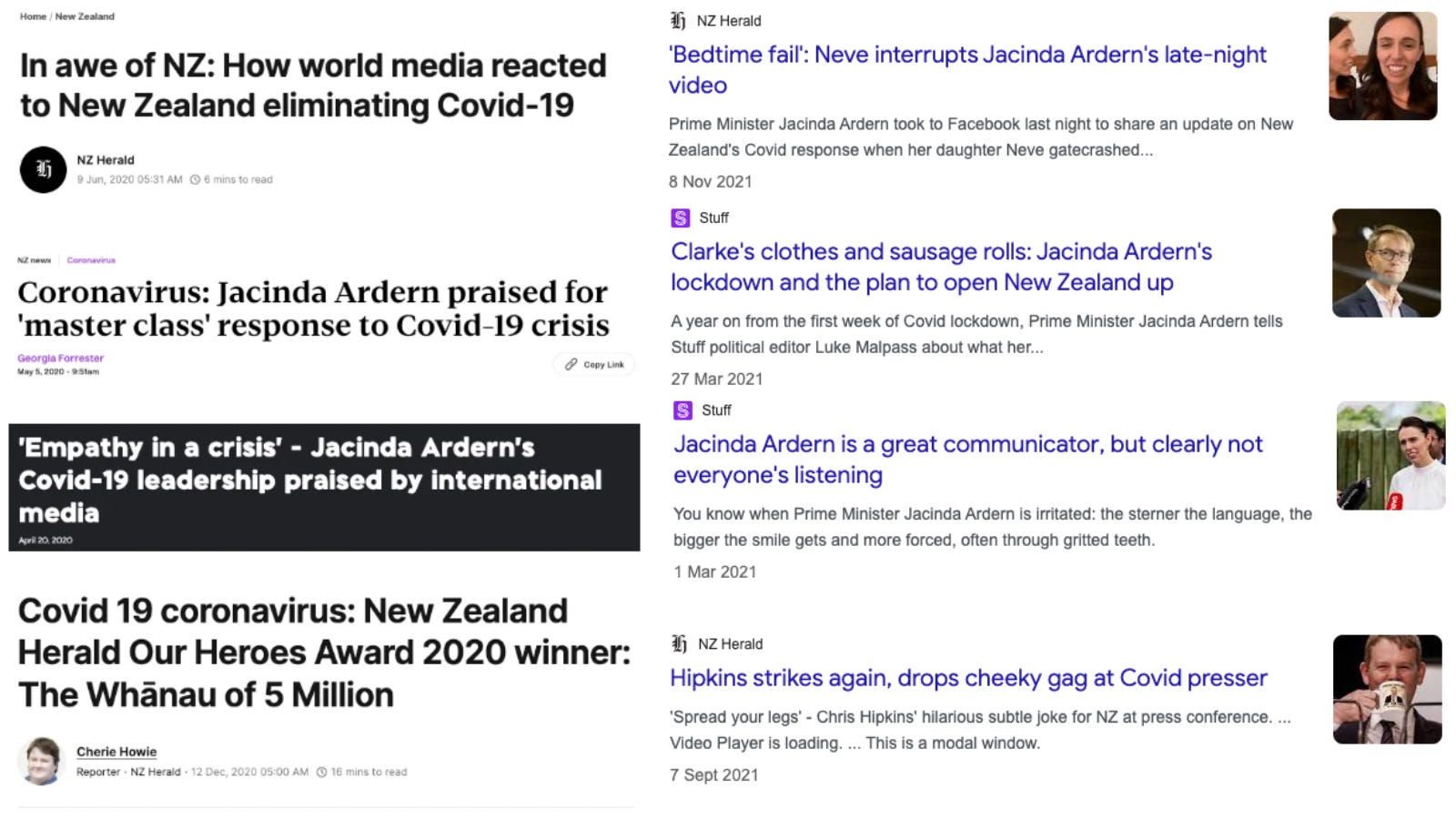
When people try to explain why the media was so uncritical during COVID, they often point to the Public Interest Journalism Fund (PIJF); the $55 million fund established by the Government to support journalism projects. Critics argue that it bought off the media, but that is not the case. Fifty-five million dollars sounds like a lot, but when you’re talking about an entire national media ecosystem it’s actually not much money at all. Newsrooms are expensive to run and a true buy-off would have required a far larger cheque.
A more plausible financial incentive during COVID was government advertising. The Government spent enormous sums on public health messaging, vaccination campaigns, and various “team of five million” communications initiatives. Some of that spending was likely necessary public service announcements, but it also had the effect of pumping significant advertising revenue into struggling media organisations. This is more plausible to me as a backdoor mechanism to get money to struggling media.
However, even that does not fully explain the behaviour of our journalists and media outlets. That is because the real issue isn’t corruption. Not in the monetary sense anyway.
The deeper problem is that many journalists genuinely believe they are doing the right thing. They see themselves as being on the side of what is morally right, the science, responsible management of an unruly public, the good. In that worldview, questioning government policy during a pandemic was dangerous and at odds with what they see as their core values. Journalists openly talked about not wanting to undermine or destabilise the COVID response by reporting critically on the government and you can understand the instinct. But this mindset essentially transforms them from journalists into government communications teams.
Another part of the equation is who now makes up the media class. Newsrooms today are overwhelmingly populated by a relatively narrow demographic of young, university-educated, urban professionals who often came through the same journalism or communications courses and share broadly similar political assumptions. The older generation of reporters, the ones who had spent decades cultivating sources, interrogating institutions, and developing the scepticism that comes from having seen governments of all stripes make mistakes, have largely moved on. Many left through newsroom cuts, others drifted into communications roles or different careers altogether, disillusioned by what the profession had become.
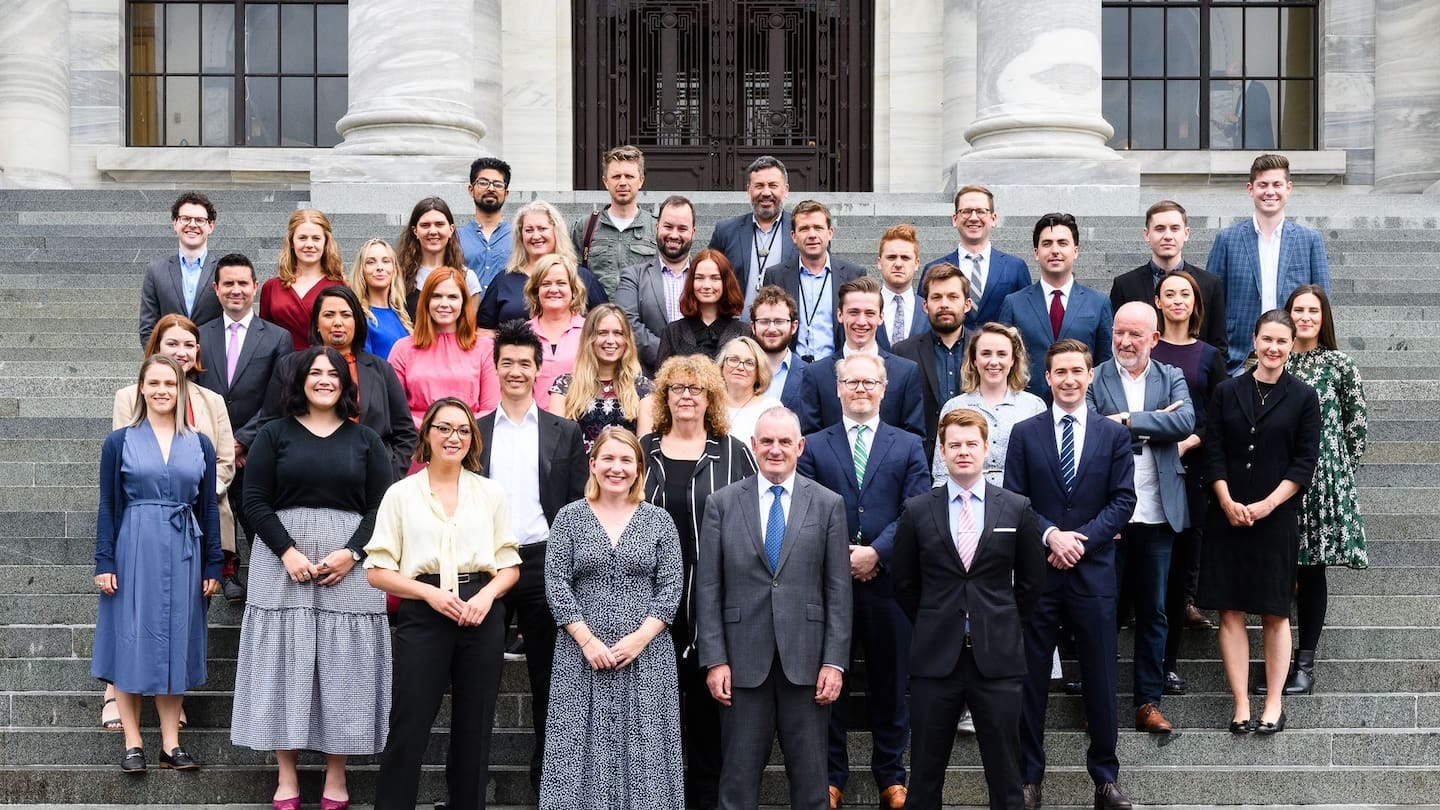
The irony is stark that for all the media’s obsession with identity politics and representation, the modern press gallery is remarkably homogeneous in practice. Disproportionately white, university-educated, middle-class, metropolitan, and socially liberal. When a profession draws from such a narrow social and ideological pool, it is hardly surprising that its coverage begins to reflect a narrow range of assumptions about how the world works.
It has been the role of journalists to expose, rattle cages, and blow the lid off secrets, forever. Imagine if journalists had applied the same logic during other historical scandals; the idea that scrutiny might “destabilise” government and therefore should be restrained. When Bob Woodward and Carl Bernstein began investigating the Watergate scandal, they were uncovering wrongdoing at the highest levels of the White House under Richard Nixon. Their reporting ultimately led to the resignation of a sitting president. If journalists had decided that exposing corruption might destabilise government during a tense political period, the scandal might never have been revealed. The press would have been told that the country needed unity and stability, and that aggressive reporting risked undermining public trust in institutions. Yet today we rightly see their work as one of the great triumphs of investigative journalism.
The same logic applies to the exposure of systemic abuse within the Catholic Church. For decades allegations of abuse by clergy were ignored or suppressed. It took relentless investigative reporting by the The Boston Globe, later depicted in the film Spotlight, to expose the scale of the crisis. The reporting revealed not just individual crimes but an institutional system of concealment. At the time, critics argued that such reporting could damage the Church and undermine faith communities. Yet few today would argue that journalists should have remained silent in the name of protecting institutional stability.
When Seymour Hersh exposed the My Lai massacre, he revealed that American soldiers had massacred hundreds of Vietnamese civilians and this story deeply embarrassed the US government and military during the Vietnam War. When Edward Snowden leaked documents exposing global surveillance programmes run by the National Security Agency, governments argued that publishing the information would damage national security.
In each of these cases the argument could be made that exposing uncomfortable truths might destabilise institutions, undermine public confidence, or interfere with government objectives. Yet it is precisely the willingness of journalists to publish such stories that defines the profession at its best and has prompted books to be written and films to be made about them. The role of the press is not to protect governments from embarrassment or shield institutions from scrutiny. It is to reveal what those in power would prefer remain hidden.
And that is why I am so furious with the New Zealand media and why I frequently talk about this. Because when journalists decide that scrutiny itself is irresponsible, they abandon the very role that makes journalism essential in a democracy. We need a strong media class. Democracy flounders without one and I am very worried about our election at the end of the year because of this.
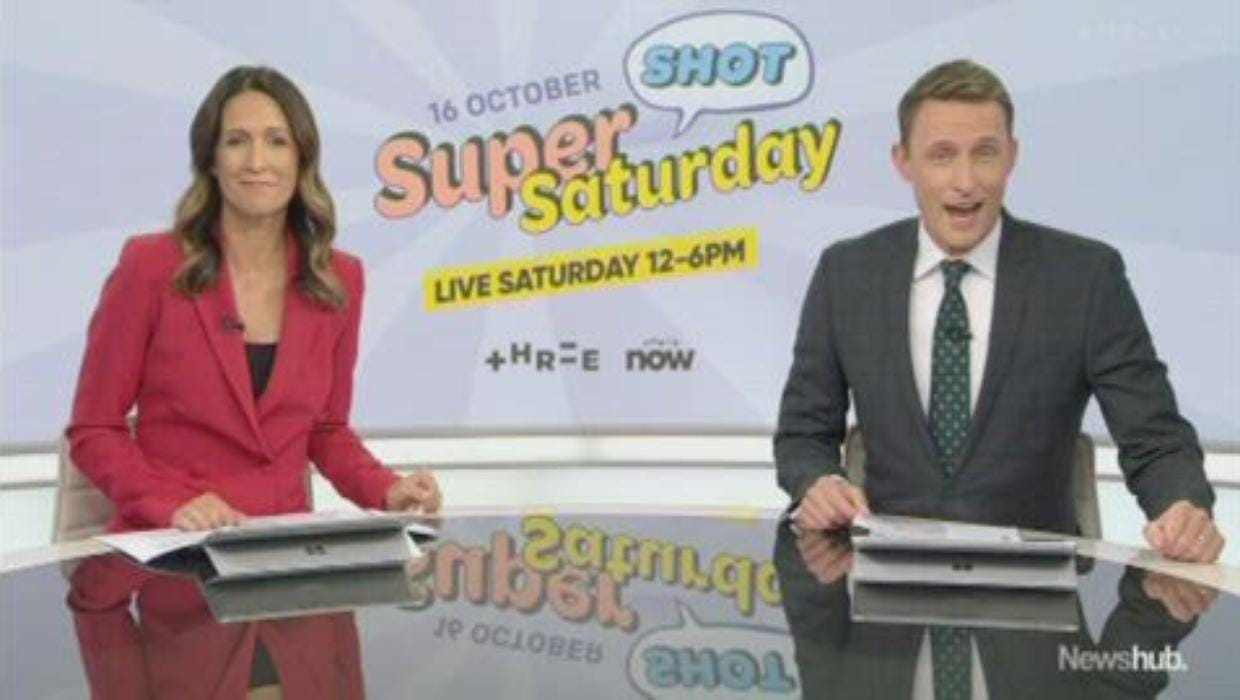
The non-journalistic mindset is visible not only in what the media reports, but also in what it choses not to report. Legitimate questions about the economic consequences of prolonged lockdowns, the proportionality of mandates, vaccine risk-benefit calculations for teenagers, and the social consequences of border closures have been frequently marginalised during and post-pandemic. The dominant narrative has emphasised unity and compliance. Headlines throughout the period reflected this framing with unending calls for the “team of five million” to unite, praise for the elimination strategy, and breathless coverage of vaccination drives like Super Saturday.
The Super Saturday “Vaxathon” itself was one of the more bizarre moments of the pandemic. News organisations weren’t simply reporting on the event, they were participating in it. Journalists danced on stages, hosted segments, and actively promoted the campaign. It was a national public relations exercise through and through, and the media was embedded within it. To his credit, Paddy Gower has recently reflected on this period with some regret, acknowledging that parts of the media crossed the line between journalism and advocacy. That reflection is welcome, but it is also incomplete because the behaviour hasn’t changed. At all.


It wasn’t just that the media amplified government messaging, it also punished dissent. Legitimate political debate was suppressed, and instead of asking whether policies were proportionate or sustainable the conversation shifted to whether questioning them was acceptable at all. The media was actively running cover for the Government.
I saw some of this Pravda dynamic up close. In 2021 I worked in the Leader of the Opposition’s office when Judith Collins led the National Party. The role of an opposition exists to scrutinise the government, question its decisions, and represent those voters who are not currently in power. But during COVID doing that job became almost impossible. Any attempt to raise concerns about government decisions was framed by the media as playing politics during a crisis. The implication was that scrutiny itself was unpatriotic or dangerous.
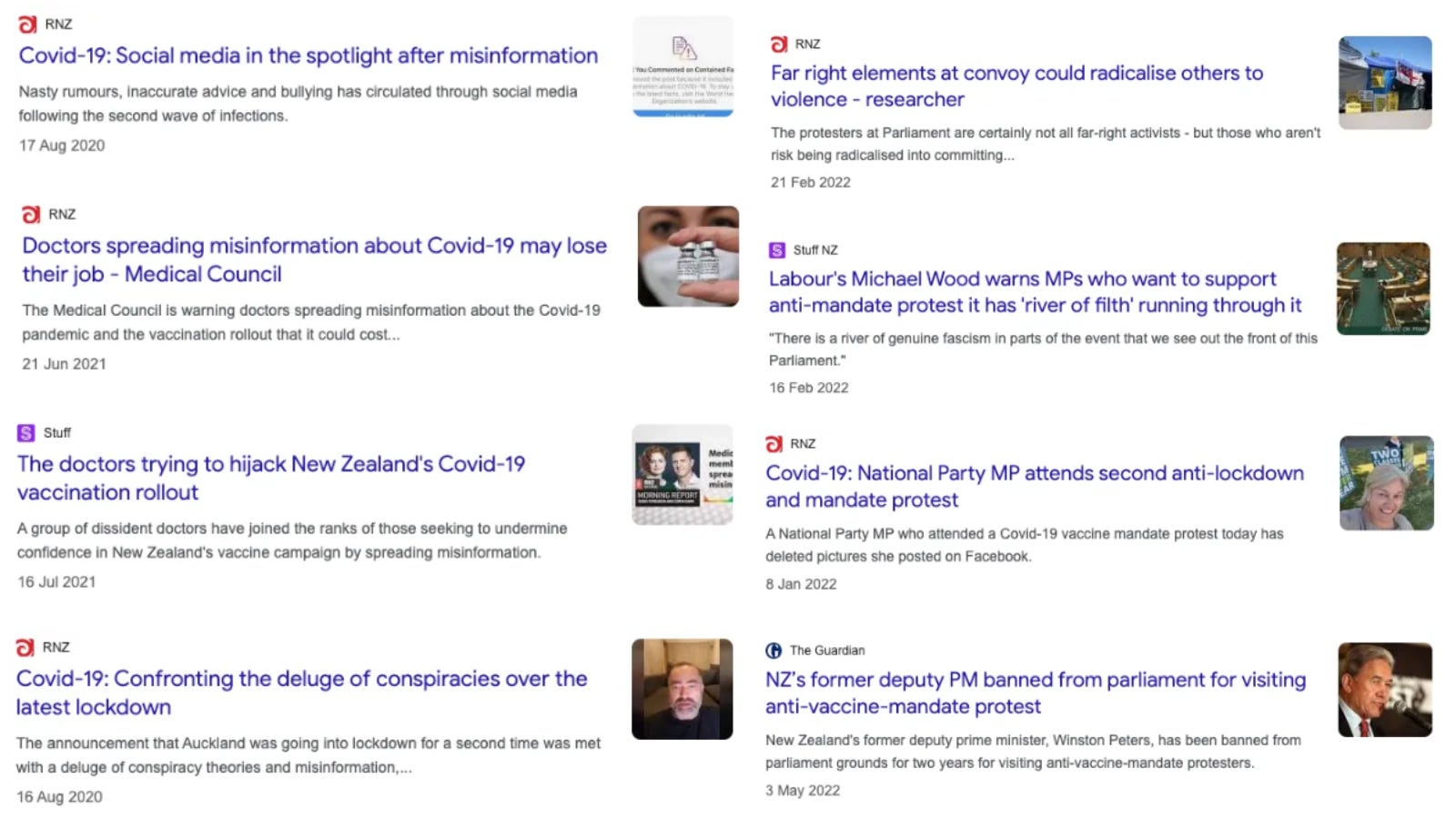
But when governments exercise extraordinary powers like emergency legislation, sweeping restrictions on movement, and unprecedented spending, scrutiny becomes more important, not less. Power is intoxicating! History is full of examples of leaders gradually expanding authority simply because no one stops them. The opposition and the media are supposed to apply the brakes, but during COVID the media disabled them.
I harp on about this because the media has an outsized influence on politics in this country. Journalists decide which stories lead the news, which issues are considered important, and how political leaders are framed. Those choices shape how voters understand the political landscape and shape what people believe matters.
Looking ahead to the election, I have very little confidence that New Zealanders will be given the information they deserve. The narrative is already being constructed with Christopher Luxon portrayed as uniquely useless and unpopular and Chris Hipkins presented as the sensible alternative. If this continues, voters will not be making decisions based on a clear understanding of the facts. They will be making them based on a story that has been constructed for them.
Which brings us back to the Royal Commission. It was meant to examine the government’s decisions during COVID, but perhaps New Zealand needs another inquiry. A People’s Commission into the media’s role during COVID-19. Not to punish journalists, and not to relitigate every editorial decision, but simply to ask some basic questions about whether the institutions tasked with scrutinising power actually did their job.
Spot on Ani. The current crop of those who write for newspapers do not understand the difference between reporting (facts) and journalism (analysis and opinion). Hence most of what you get is a mush mash. But the big thing lacking is objectivity. And that is where the bias kicks in. Stuff is hopeless - a news media basket case. I don’t bother with em anymore.
Many of us do not give even passing consideration to MSM, because there are excellent alternatives such as Ani O'Brien to read instead. I have no issue with media giving Luxon a hard time, but the contrast between this and the fawning adulation given to PM Ardern is so marked surely everyone must see it. My wife and I stopped watching the tv news around 2019, as at that time we felt the first few stories essentially boiled down to variations on the same question "to what extent does the sun shine out of Jacinda's arse today?". Now we're firmly in the category of people who resent any of our tax dollars supporting any MSM at all, the sooner RNZ and TVNZ become fully self supporting the better, let people who actually want to be force-fed woke garbage pay for the privelege themselves.