


The Crimes Legislation (Stalking and Harassment) Amendment Bill unanimously passed its first reading late last year. The select committee consultation process received 608 written and 62 oral submissions. One each of the written and oral submissions were mine.
Today, Justice Minister Paul Goldsmith announced that the select committee had recommended changes to the bill and that the Government had accepted them. Notably, the bill has been amended to apply in the case of two stalking or harassment acts within 24 months; it had originally been three within 12 months. This was one of the changes, I and several others, had advocated for. The inclusion of “doxxing” in the definition of stalking or harassment was also a welcome change and although I did not ask for it, I had mentioned being doxxed in my submission.
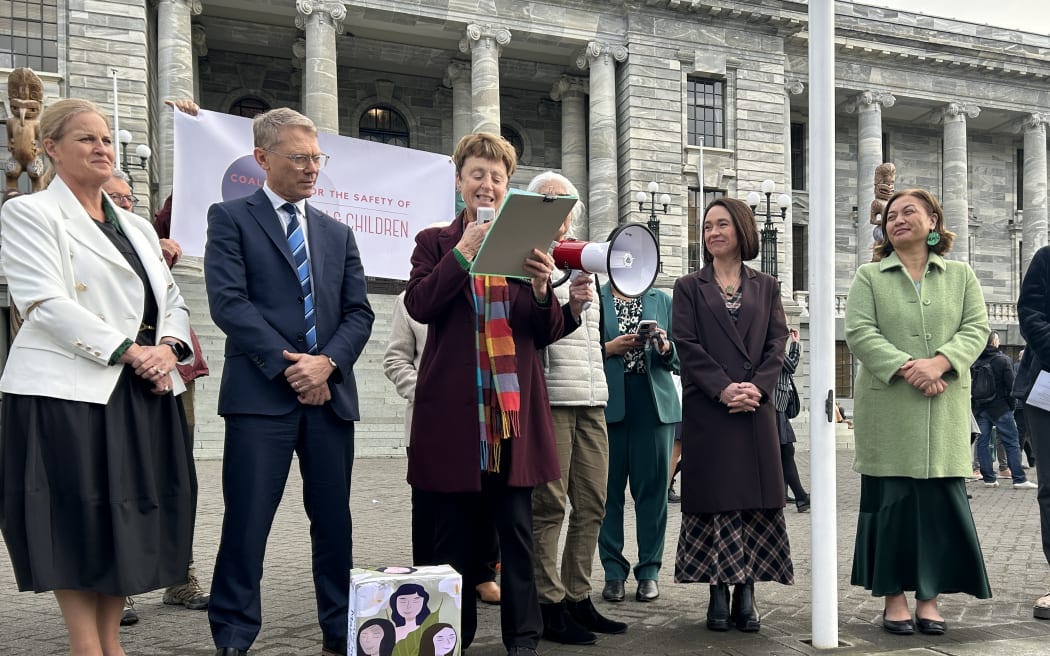
I had advocated for the proposed maximum five year prison sentence be lifted to ten years in line with similar law in the UK, but following select committee the maximum penalty remains at five years. I worry that our lenient judiciary will never even get close to sentencing a stalker to that maximum.
The New Zealand Herald reports that the Act Party had some additional comments in the select committee report saying:
“we do need to strike a balance between ensuring a sufficient pattern of behaviour is established to protect victims while not unintentionally creating offenders and burdening the courts”.
It encouraged police to give written notification to potential offenders “to the fullest extent possible” to ensure they “are made aware of the specified acts which may trigger an offence”. Act also wants the list of potential defences to be “maintained in the interests of justice”.1
Despite having been a victim of stalking myself, I share the concerns raised by Act. The New Zealand Free Speech Union (of which I am a board member) have raised concerns along the same lines.
In our press release, Acting Chair Stephen Franks says:
“Truth should be a defence for ‘damaging, or undermining [a person’s] reputation, opportunities, or relationships’. That would save the centuries-long principle that protects the public interest in learning home truths about powerful people and wrongdoers.”
Additionally, problems of subjectivity, especially in relation to concepts of harm have raised flags for FSU:
“The broad definition of 'specified acts' as inducing fear or distress, combined with the low threshold for establishing a 'pattern of behaviour', already leaves wide scope for misuse against legitimate surveillance, and dissent. Likewise, the inclusion of ‘contacting or communicating with a person’ is vague and has the potential to be weaponised.
“By prioritising the term ‘fear or distress’ without a clear objective override, the Bill raises similar issues to ‘hate speech’ legislation. The law does not recognise that some people ought to be ashamed (“distressed”) by exposure of their own conduct.”
I acknowledge these vulnerabilities, but depart from my colleagues in how much weighting I give them. We should be vigilant about the application of this law and all laws. However, stalking and harassment are crimes that can impact victims in immensely negative ways that are very difficult to police.
The select committee report said: “we note that stalking is often pre‐meditated and could involve perpetrators tailoring their behaviour.” These perpetrators are also obsessive and invested in a pattern of crime.
Just because a crime is difficult to legislate against and hard to police, does not mean we should not attempt to protect victims in law. We cannot let a desire for perfect legislation get in the way of good legislation. I support the progress of this bill, but I will also support FSU in seeking to improve the bill as it goes through the next stages.
In particular, I suggest that an amendment could be tabled to protect speech rights by creating a higher threshold for people in elected office to use the law. This is not because I don’t think that politicians should be protected from stalking and harassment, but because in a liberal democracy people must be able to criticise elected representatives in ways that can be very uncomfortable for them. It cannot be deemed stalking for a constituent to show up to every public meeting held by an MP to share the opinion that the MP is a wrong, bigoted, or full of sh*t. It would be very wrong for stalking law to be used to insulate politicians from criticism including criticism that is rude and mean.
I intend to chat with some MPs and see if anyone might be keen to support such an amendment. Though to do so could be seen as against their own interests.
“We’ve said from day one victims are our priority. Returning them to the heart of our justice system underpins all our work to restore law and order,” said Justice Minister Paul Goldsmith. It echoes what I began my written submission saying and I am pleased to see the sentiment being expressed by the Government.
My written submission:
I support the passing of the Crimes Legislation (Stalking and Harassment) Amendment Bill.
However, I do have some suggestions as to how the Bill could be improved in order to better serve the victims of stalking and harassment and the community in general.
I urge the Select Committee to approach the Bill with victims at the forefront of your minds. Too often our system becomes focused on the perceived needs of offenders to the detriment of achieving justice for those they have harmed. There are foundational rights for those accused and/or convicted of offences that should always be upheld, but in my view, New Zealand’s legal system goes much further than that.
From the perspective of victims and concerned members of the community, our judiciary seems to use any excuse and mechanism to keep offenders out of prison, no matter how violent and devastating their crimes. Addressing this is a much larger project that requires Parliament to reestablish a much more prescriptive and victim-centred Sentencing Act. It requires reform that specifies longer minimum sentences, longer minimum non-parole periods, fewer options for discounting, and tighter restrictions on converting to community and home detention.
Lengthy prison sentences are often appropriate when considering the victim’s perspective. Justice is not just about punishment for the crime, it is also about protecting others from future offending, and it is about retribution. The idea of retribution may seem distasteful to some in 2025, but it is fundamental to our justice system. Whereas historically, families would exact revenge with violence, the state has taken over the role of responding on our behalf and if they don’t satisfy our human need for having the score settled somewhat, they lose the confidence of the populace. Community and home detention for serious crimes do not satisfy retributive sentiment.
While I appreciate that this sentencing reform is not the purpose of this Bill, I ask the Select Committee to recommend that this legislation is strengthened in order to ensure its efficacy and prevent it from being rendered pointless the minute it hits a courtroom.
The maximum sentence should, in the first instance, be raised to ten years in line with the law in the United Kingdom. Many cases of stalking and harassment originate in situations of domestic violence and relationships ending. Currently, victims of domestic violence barely get a reprieve from their abusers as judges are quick to impose non-custodial sentences or discount sentences to the point that they are reduced to almost nothing. Even violent offences receive community and home detention which places them back in the environment where they can continue to terrorise their victims.
The relatively recent passing of an anti-strangulation law was welcomed, as this proposed Bill is, but it is also a warning. Speaking to police prosecutors, I have been told that they were hopeful about how the law could help them prosecute intimate-partner violence, in particular, but in reality the judiciary have taken the teeth out of the law almost immediately. They have quickly developed sentencing case law that interprets sentencing guidelines in the most lenient way possible. One prosecutor told me it feels almost pointless proceeding with charges as the victim inevitably feels that they have been denied justice when the judge passes down a pitiful sentence.
It is clear that in order to ensure that the intention of Parliament is borne out, judges need to be given much more prescriptive sentencing guidelines. They cannot be trusted to faithfully interpret sentencing expectations, instead of applying their own offender-centric politics of leniency.
Restraining orders and parole conditions also aren’t worth the paper they are written on when the consequences for breaching them does not even see the offender removed from the community. The proposed legislation inserts the breaching of a restraining order as an aggravating factor and parole breaches are always potential aggravating factors. However, I submit that I have little confidence in the judiciary adequately applying these in the sentencing process and ask the Select Committee to consider how the Bill could make these automatic aggravating factors.
A stalker is a particularly obsessed offender, more unlikely even than other offenders to be undeterred by orders to stay away from victims. It is my opinion that if offenders are unwilling to be rehabilitated, their victims and the community are entitled to be protected from them.
It is important to acknowledge that women are far more likely to be targets of stalking and harassment, and men far more likely to be the perpetrators. These statistics are important in considering how best to protect victims from further offences, understanding the conditions which give rise to the offending, and taking action to prevent offenders from further offending and having the opportunity to further offend.
Stalking and harassment offenders often reoffend and often reoffend against the same victim. This makes appropriate sentencing crucial for the safety and wellbeing of the victim(s), the protection of the community, and in order to achieve justice.
Australian statistics show that:
“Family violence-related stalking offenders were more likely to reoffend within four years than non-family violence-related offenders, except in the case of reoffences involving breach of a personal safety intervention order (PSIO)”2
and;
“Male stalking offenders were more likely to reoffend within four years than female stalking offenders.”3
In 2022, Australia's National Research Organisation for Women's Safety (ANROWS) reported that “stalking occurred in two fifths of the 212 cases in which a male primary domestic violence abuser killed a female victim.”
Stalking and harassment are serious offences with wide-ranging and severe impacts on victims. The Office of National Statistics in the UK quotes one victim saying:
“I have lost my life, my livelihood, friends, and family. I have lost all trust in everyone and view everyone with suspicion... I cannot sleep as the nightmares follow.”4
Victims describe an immense psychological toll and living in constant fear. This was my experience too.
Due to the nature of my women’s rights advocacy I have attracted many online harassers. I have been doxxed, had my employers contacted many times, had my reputation trashed, and been subjected to violent and sexual threats and abuse. I have learnt to manage this over the years. I block abusers and do my best to ignore them. Netsafe have been useless and I stopped going to them for help.
A 2022 paper titled ‘A STALKING LAW FOR NEW ZEALAND: Why it is necessary and what it should look like’ was published by a coalition of organisations and describes that:
“Women are disproportionately affected by stalking, particularly young women, disabled women, rainbow women and likely wāhine Māori, while migrants and ethnic minorities may experience unique forms of stalking. The most dangerous, and persistent stalking is conducted by ex-partners of women, with child contact being a particular risk factor. The targeting of women participating in public discourse (politicians, journalists, celebrities) may dissuade others from speaking out, preventing women from contributing their expertise and thought leadership to public discourse.”5
I am what these groups call a “rainbow woman” though I prefer the term ‘lesbian’. At 34 it is arguable as to whether I am still young, but I have been a target of harassment since my early twenties. I also live with a significant disorder which would have me qualify as a “disabled woman”. Despite all of this I am an imperfect victim because of my politics and moderately large social media following.
On many occasions I have been told that I essentially deserve the abuse I receive because I am a sex realist, gender critical. I have opposed legislation that allows men to identify as women and access women’s spaces. This apparently makes me fair game for stalking and harassment.
I encourage the Select Committee to reflect on the second part of the above quote (I have bolded it) and consider that victim-blaming is not okay even when you disagree with the politics of the victim. Perhaps it isn’t something that can be written into the law, but it is something that bears emphasising; the law must apply to offenders no matter their politics and protect victims no matter theirs.
The online harassment is upsetting and does frighten me at times, but it is nothing compared to the terror I experienced when one particular activist took their online hatred for me into the real world. He is very recognisable due to being about 6’5 and suddenly began popping up regularly around my work, home, and places I visited on the weekends. At first I thought it was a coincidence. It was not.
This person continued his tirades against me online and they became more frightening because his aggression and threatening nature was no longer just on the screen, it could pop up at any moment.
I finally went to the police when one day I went for a walk out at Makara Beach; a pretty remote beach in Wellington. I posted a photo of the recognisable cliffs on my Instagram story on my way up and sometime later as I made my way down I spotted my stalker on the coastal path. There is really only one way to get back to the carpark and I was effectively trapped.
I genuinely thought I was going to at least be assaulted. There was no one else around. I wondered if I he would push me into the sea and began to worry about my family having to go through identifying my body when I eventually washed up.
Fortunately, all my stalker wanted to do was terrify me and he succeeded. He got in my way and intimidated me with his size. When I pushed past him and ran he laughed.
If you haven’t experienced the fear of someone deranged following you with the deliberate intention to scare you, you have no idea of what it does to your life. Sure, he didn’t assault me or kill me. But he demonstrated to me how easily he could.
The police were lovely, but unable to do much. They came to my house and went through how I could make it more secure and measures I could take to reduce risk of this person harming me. They explained that this was just one provable incident (he had viewed my Instagram story and so knew I was at the beach) and there would need to be another in the next twelve months for them to take action.
There were more incidents, but none of them provable. He always had plausible deniability. I didn’t even bother to tell the police when I saw him. I realised I basically needed to wait for him to actually physically harm me before the police could do anything. Although I think they may have gone to speak to him informally.
Eventually, the stalking was one of the reasons I moved back to Auckland. It took me a long time to stop looking over my shoulder even living in a different city.
I tell you my story, because as much as I am glad to see this legislation being progressed, I don’t see anything in it that would have really made a difference for me. In fact, this proposed law requires THREE incidents in 12 months making it more difficult to get help. These offenders are sneaky, clever, and know how to ensure plausible deniability. They could harass you every day in subtle ways and ensure that they never crossed the line far enough to clock up an ‘incident’.
I don’t deny it is a difficult crime for police to investigate and prosecute because of the subtlety. Offenders tend to operate with a ‘death by a thousand cuts’ approach. I would love to see the law allow for police to treat an accumulation of behaviours that may not reach the threshold of an incident as a collective set of evidence necessitate action.
I also strongly urge the Committee to reduce the number of incidents required to TWO. This is in line with UK law and existing New Zealand Harassment Act it will replace. I note that other advocates for women are calling for this as well and suggest that it is important the Committee take this on board.
This law must be fit for purpose in order for it to be more than a meaningless virtue signal. It needs to be able to address a crime that is primarily psychological and characteristically sneaky.
I want to see this law passed, but to see it improved as part of the Select Committee process would be a real victory for victims.
I would like to discuss my submission with the Committee in person/over Zoom should the opportunity arise.
https://www.nzherald.co.nz/nz/politics/government-agrees-to-big-change-for-proposed-anti-stalking-law-justice-minister-paul-goldsmith-says/SW7GXGO3MNCAHKZAFF6L4ZUUE4/
Australian Domestic and Family Violence Death Review Network, & Australia’s National Research Organisation for Women’s Safety. (2022). Australian Domestic and Family Violence Death Review Network data report: Intimate partner violence homicides 2010–2018 (2nd ed.; Research report, 03/2022). ANROWS.
Stalking Law for NZ, Nov 2022, ACSWC, & NCIWR.
Go Ani, your posts have highlighted to me (again) of an aspect of resistance to many laws & ideas 'more generally' being that of 'misuse' or 'weaponising' of the law. I have often thought that the penalties for making a vexatious police complaint should be the same as that of that crime. This is a question of 'no substantial consequences' for 'deliberately' making a 'false' claim. I get the push back from the position of 'fear of making a claim', but if truth is not at the core, then all 'justice' fails. I also get the concern of the added 'stress' on the system however as you say, just because its 'hard' doesn't mean we should not consider it. Thoughts?
The FSU already knows I'm not a fan, but here's what gets to me about this concern voiced by Stephen Franks: "The law does not recognise that some people ought to be ashamed (“distressed”) by exposure of their own conduct.” This reflects a mindset which always focuses on the person expressing something and not on the person experiencing it, always on how something can be misused, not on how it might have benefits. That said, I agree that there could be a higher bar for those in public office, since they have a responsibility to listen to constituents and those affected by their behaviour. But they're human too and can still be subject to dangerous stalking.